
If you’ve ever been walking your Bulldog and watched them back right out of their harness like a little Houdini, you’re not alone. Bulldogs are built differently — and that’s exactly why so many “one-size-fits-all” harnesses just don’t cut it.
At Bulldog Grade, we’ve lived this frustration first-hand. Our Bulldogs are strong, stocky, barrel-chested, and full of determination. It’s what makes them amazing — but also what makes fitting them safely a real challenge.
Let’s take a closer look at why Bulldogs can escape standard harnesses, and what you can do to stop it for good.
1️⃣ The Bulldog Body Problem

Most harnesses are designed for generic dog builds — lean frames, tapered necks, and narrower chests. Bulldogs? Not even close.
Bulldogs have:
-
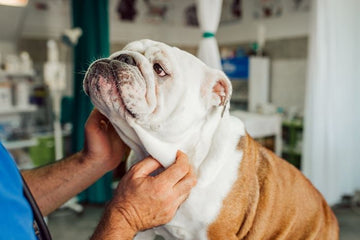
A thick, muscular neck that’s often as wide as their head (or wider)
-
A broad, round chest
-
A short back and low center of gravity
When you put a “normal” harness on that kind of build, you’re forcing it to fit in all the wrong places. The neck loop tends to sit too high, the chest straps ride up, and with a little backward pressure — whoop! — your Bulldog is free.
2️⃣ Cheap Straps and Bad Angles

Standard harnesses are made for mass production, not Bulldog anatomy. The straps often create a straight “T” shape across the chest, which doesn’t secure Bulldogs well. When a Bulldog pulls backward, the tension shifts upward instead of locking around the shoulders — and that’s what causes that dreaded slip-out moment.
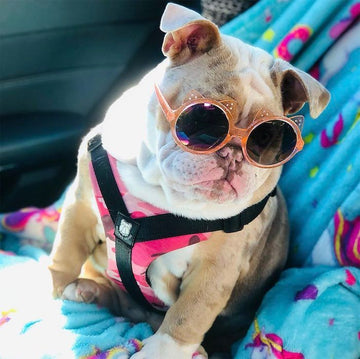
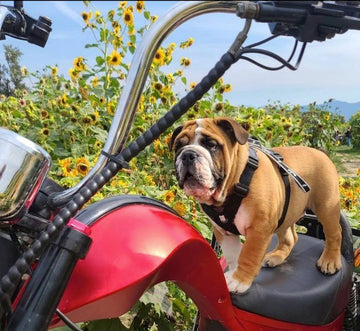
At Bulldog Grade, we flipped the design script. Our harnesses use an X-shaped chest vest with angled reinforcement stitching that hugs the chest and distributes weight evenly. Instead of pulling up, the tension pulls in — keeping your Bulldog secure without choking or restricting movement.
3️⃣ Fit Matters More Than You Think

Even a well-designed harness can fail if it doesn’t fit correctly. Bulldogs come in all kinds — English, French, American, Victorian, and mixes — and no two are shaped quite the same.
A few quick fit tips:
-
The harness should fit snug but not tight — you should be able to slip two fingers under the straps.
-
Watch for gaps at the shoulders — if you can see daylight between the harness and your Bulldog’s body, it’s too loose.
-
Avoid neck loops — Bulldogs’ necks don’t taper, so a step-in design or adjustable chest vest is always better.
That’s exactly why we custom-designed the Bulldog Grade Harness 2.0 — with four quick-release buckles and fully adjustable straps for a secure, custom fit on every Bulldog shape.
4️⃣ Comfort Equals Safety

A lot of owners tighten a loose harness until it feels “secure.” The problem? That just causes rubbing, pinching, and overheating — and eventually, your Bulldog will learn how to wiggle free to escape the discomfort.
Our goal at Bulldog Grade has always been to build gear Bulldogs actually like wearing — tough, breathable, water-resistant materials that don’t rub or ride up, even during long walks. When your Bully feels comfortable, they’re less likely to fight the harness in the first place.
5️⃣ How to Fix It — For Good
Here’s the quick checklist we give every Bulldog owner we meet:
✅ Choose a harness made specifically for Bulldogs, not generic breeds.
✅ Look for angled, X-chest construction and adjustable straps.
✅ Avoid any harness that tightens around the neck or shoulders.
✅ Always test the fit with gentle backward pressure before heading out.
And if you’re tired of your Bulldog’s “Great Escape” act — it might be time for Bulldog Grade gear. Our harnesses were built by Bulldog owners who’ve been exactly where you are now.
They’re escape-proof, durable, and designed to keep your Bulldog cool, safe, and comfortable — no matter how determined they are to do things their own way.
🐾 Final Thoughts 🐾

Bulldogs don’t fit the mold — and they shouldn’t have to. The right harness isn’t just about control, it’s about care. When your Bulldog feels comfortable, secure, and understood, walks get easier for both of you.
We hope you picked up something useful about caring for your Bulldog today.
If you’d like to learn more about Bulldogs, please visit The Bulldog Blog, presented by Bulldog Grade.
###









Hi! I recently got one of your harnesses and am excited to get it on my bully baby. Do you have any video tutorials of how to put it on? I think mine might still be a bit big for him and I’ve adjusted everything, but any information you can share would be helpful. Thanks!